
Financial Well-being and Investment Choices: The Impact of Individual Financial Stability on Market Involvement and Building Lasting Wealth
- Financial wellness, combining objective health and subjective well-being, directly influences market participation and investment success according to 2025 studies. - Four financial wellness quadrants reveal systemic gaps: only 38% achieve high health and well-being, while millennials show mixed confidence amid rising debt and stagnant wages. - Behavioral biases affect all investors: 84% of high-net-worth individuals seek education to counter overconfidence, while young investors rely on social media for
The Connection Between Financial Well-Being and Investment Choices
Understanding how personal financial stability influences investment decisions is more important than ever. As global markets shift and psychological factors play a larger role in how people manage their money, examining the relationship between financial health and wealth-building is essential. Recent research highlights that financial wellness—which includes both measurable financial stability (like savings and debt control) and personal feelings of security (such as perceived control and stress)—is a key factor in determining who invests and how successful they are. This article delves into how different aspects of financial wellness, along with investor education and behavioral finance, shape outcomes in the investment world.
How Financial Wellness Shapes Investment Habits
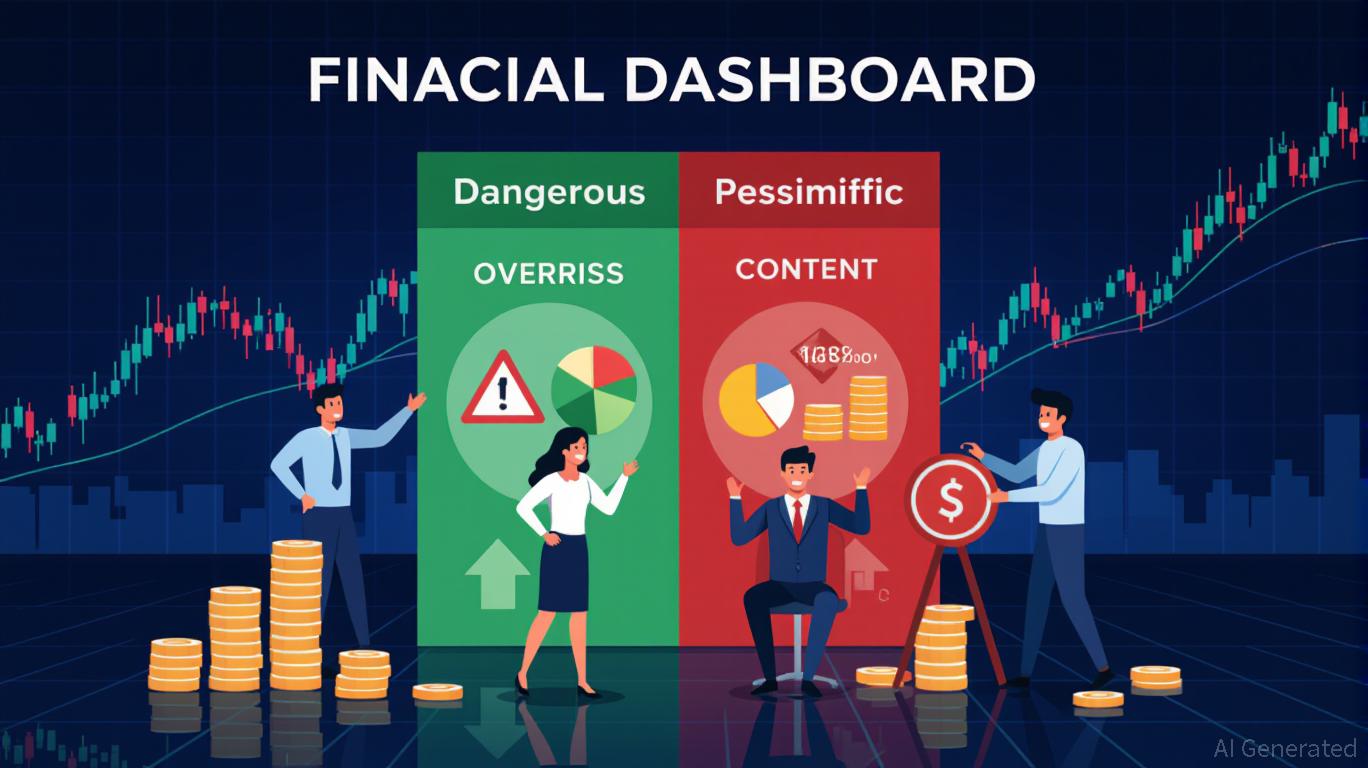
Financial wellness is a dynamic state that influences how people interact with financial markets. A 2025 study divides financial wellness into four categories: dangerous (low financial health and well-being), overconfident (poor financial health but high well-being), pessimistic (good financial health but low well-being), and content (strong in both areas). Only 38% of people are in the ideal "content" group, revealing widespread gaps in both objective and subjective financial health, as reported by the Financial Planning Association.
Millennials, a group crucial to the future of investing, often feel both hopeful and anxious about their finances. According to a 2025 Banking Journal report, just 11% consider themselves "very healthy" financially, while 47% feel "somewhat healthy." Factors like stagnant wages, higher living expenses, and student loans contribute to uncertainty about long-term planning. This uncertainty is reflected in their investment choices: younger investors are turning to social media and online influencers for advice, frequently taking on risky investments such as meme stocks, even though many lack a solid understanding of financial basics like margin trading and short selling, as research indicates.
On the other hand, wealthy investors, despite their confidence, are not immune to mistakes driven by emotion. An exploratory study found that 84% of affluent individuals seek additional financial education, and the same percentage value working with financial advisors to help manage emotional biases, according to the Financial Planning Association. This suggests that even those with significant resources can fall prey to overconfidence and emotionally driven decisions.
The Influence of Behavioral Finance and Investor Education
Behavioral finance helps explain how psychological tendencies can lead to poor investment decisions. Overconfidence, for example, can affect the link between financial knowledge and actual investment behavior. A 2025 study in Palestine found that greater financial literacy leads to more sensible investment choices, especially in emerging markets, as noted in Frontiers in Behavioral Economics. Globally, a lack of financial education increases the risk of speculative and impulsive investing.
The FINRA Investor Education Foundation’s 2025 report highlights that many young investors, swayed by viral trends, lack a basic understanding of risk management. Many are unfamiliar with how margin trading works or the consequences of short selling, as research shows. These knowledge gaps have real consequences: without a strong grasp of risk, investors are more likely to take on excessive risk, which can lead to poor returns or significant losses.
Fortunately, financial education can help correct these issues. Studies show that financial literacy programs improve skills like budgeting, managing debt, and saving—essential foundations for successful investing, according to a 2025 study. For example, Vanguard found that employees with emergency savings covering three to six months of expenses reported a 34% boost in financial well-being (21% from having $2,000 saved, plus 13% for larger reserves), as detailed in Vanguard’s 2025 report. This financial cushion reduces the need to tap into retirement savings during emergencies—a trend that has increased from 2.7% in 2018 to nearly 5% in 2024, according to a 2025 Payroll Integrations report.
Building Financial Resilience for Lasting Investment Success
Financial resilience, which includes budgeting, debt control, and strategic planning, is fundamental for long-term investment growth. The OECD describes financial resilience as the ability to withstand economic shocks without lasting harm, emphasizing the value of emergency funds and disciplined budgeting, as highlighted in a NerdWallet study. These habits are especially important in high-cost environments, where automating savings and debt payments can help individuals stay on track with their financial goals, according to a Dunca Group report.
The link between emergency savings and retirement savings is clear. Federal Reserve data shows that in 2024, 55% of U.S. adults had emergency funds covering at least three months of expenses, up from 54% the previous year, as reported in the Federal Reserve’s 2025 report. Vanguard’s research further reveals that having emergency savings reduces early withdrawals from 401(k) accounts by 17 percentage points and increases retirement contributions by 2.2 percentage points, according to their 2025 research. Emergency savings serve as a safety net, allowing investors to avoid dipping into retirement funds and maintain long-term growth.
Debt reduction programs can be both beneficial and challenging. While paying off high-interest debt frees up money for retirement savings, the restart of federal student loan payments in 2023 has put pressure on many families. A 2025 Plan Sponsor report found that 75% of student loan borrowers expect this to impact their retirement savings, with 22% planning to decrease contributions. This highlights the need to balance debt repayment with long-term financial planning to avoid sacrificing future wealth for immediate relief.
Implications for Policymakers and Employers
The insights above carry significant weight for both policymakers and employers. Financial wellness programs are growing rapidly, with the global market expected to reach $1.21 billion by 2029, according to Research and Markets. Employers are increasingly offering tools like earned wage access and personalized financial planning to help reduce reliance on high-interest loans, as noted in Enrich’s 2025 trends report. These initiatives not only provide short-term stability but also encourage habits that support long-term investment success.
Nonetheless, challenges remain. Lower-income families often face barriers to accessing employer-sponsored retirement plans due to geographic and institutional factors. Automatic enrollment has boosted participation among the lowest income earners by 28 percentage points, but financial literacy remains a significant hurdle, as shown in a 2025 ScienceDirect study. Targeted education programs, both in schools and workplaces, are crucial to closing these gaps.
Final Thoughts
Financial wellness forms the foundation for healthy investment behavior. By building resilience through emergency savings, careful debt management, and ongoing financial education, individuals can better handle market ups and downs. The evidence is clear: those who focus on financial wellness are more likely to invest, avoid costly errors, and achieve lasting wealth. Achieving widespread financial health, however, requires a joint effort—governments, employers, and educators must work together to create systems that empower people to succeed in today’s complex financial world.
Disclaimer: The content of this article solely reflects the author's opinion and does not represent the platform in any capacity. This article is not intended to serve as a reference for making investment decisions.
You may also like

Google Translate now enables you to listen to live translations directly through your headphones

Data leak at major credit reporting firm 700Credit impacts no fewer than 5.6 million individuals
Microsoft purchases 3.6 million metric tons of carbon removal from a bioenergy facility
Trending news
MoreCrypto prices
More





