
Why the COAI Index Is Plummeting and Its Implications for Technology Investors
- The COAI Index, tracking AI-focused crypto assets, has dropped 88% year-to-date in late 2025 due to deteriorating market sentiment, regulatory uncertainty, and sector volatility. - C3 AI , a key index constituent, reported a $116.8M net loss and 19% revenue decline in Q1 2025, compounded by a lawsuit and CEO departure. - Regulatory shifts, including the U.S. CLARITY Act and EU AI Act, created compliance burdens, deterring investment and straining smaller firms. - The index's 97% token concentration in to
COAI Index Plunges: A Wake-Up Call for AI Crypto Investors
The ChainOpera AI (COAI) Index, which tracks the performance of AI-related cryptocurrencies, experienced a dramatic 88% decline in value by the end of 2025. This sharp downturn has raised serious concerns about the long-term viability of speculative investments in both AI equities and crypto assets. The collapse is the result of a combination of negative investor sentiment, unclear regulatory guidance, and heightened volatility within the sector, all of which have shaken confidence among stakeholders. For those investing in technology, the COAI’s rapid descent serves as a stark reminder of the dangers in confusing technological innovation with sustainable financial returns.
Investor Confidence Shaken: Earnings Misses and Executive Instability
The root of the COAI’s troubles lies in the disappointing performance of its leading components, most notably C3 AI (NYSE:AI). In the first quarter of 2025, C3 AI reported a significant net loss of $116.8 million and saw its revenue fall by 19% compared to the previous year. The company also became embroiled in a class-action lawsuit over alleged misrepresentation of its financials, and the sudden resignation of CEO Thomas Siebel left a leadership vacuum. As a result, analysts have revised their outlooks downward, with consensus projections for 2026 revenue dropping to $323 million—a 13% decrease from earlier forecasts—and anticipated losses per share reaching $3.20.
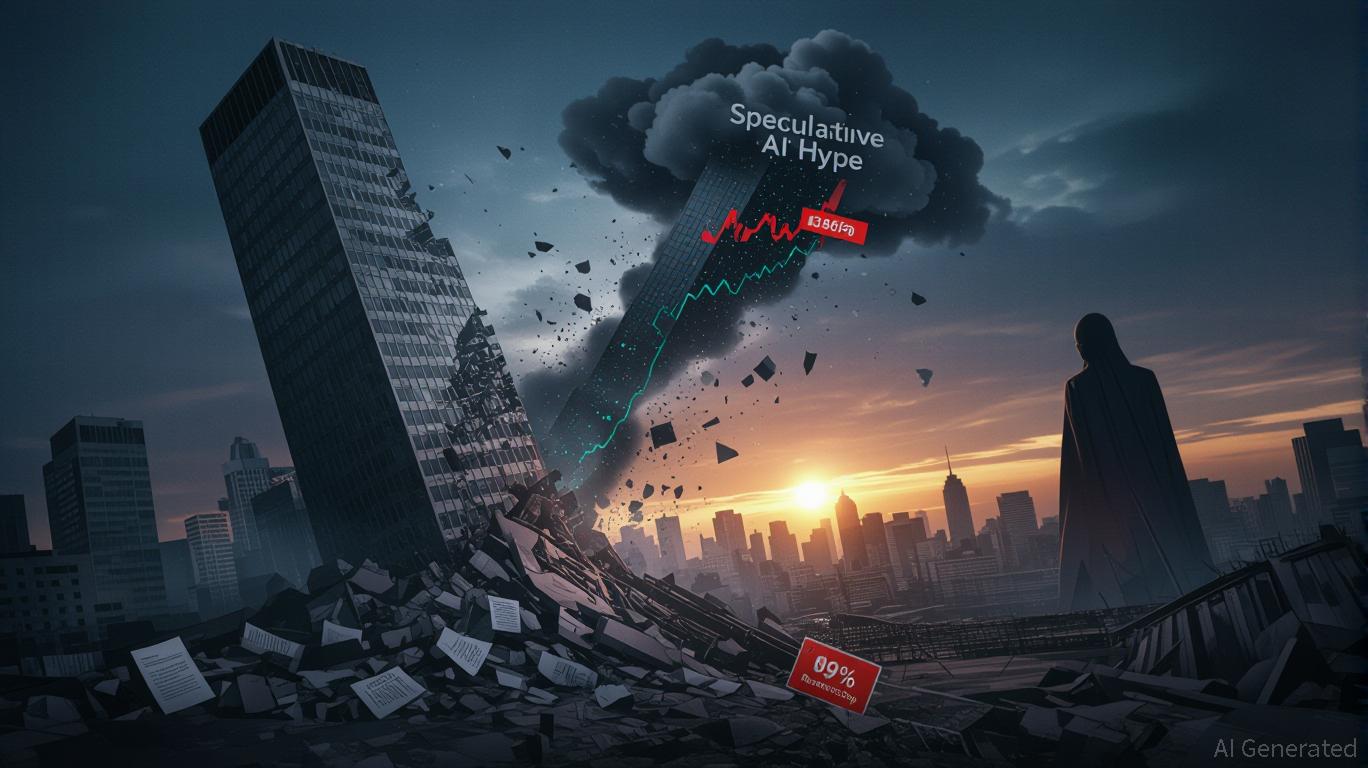
These developments have prompted a series of analyst downgrades. DA Davidson reiterated its "underperform" rating with a $13 price target in December 2025, while Morgan Stanley lowered its target to $11 and assigned an "underweight" rating. Northland Securities also shifted its stance from "outperform" to "market perform" in August 2025. In total, 15 firms averaged a "Reduce" recommendation for C3 AI throughout the year. The fallout from C3 AI’s difficulties has rippled through the entire COAI Index, forcing investors to reconsider the sector’s underlying fundamentals.
Regulatory Uncertainty: New Rules and Rising Costs
Ambiguous and evolving regulations have further intensified the sector’s challenges. The U.S. CLARITY Act, intended to clarify the legal status of AI tokens, has instead created confusion and discouraged institutional participation. Meanwhile, the EU’s AI Act, which took effect in August 2024, introduced strict compliance requirements for high-risk AI applications. The GPAI Code of Practice, launched in July 2025, added voluntary standards for transparency and safety, but its rollout has placed additional strain on smaller companies already facing liquidity issues.
The EU Digital Omnibus Package, released in November 2025, aimed to simplify digital regulations but ended up increasing compliance costs for small and medium-sized enterprises. These overlapping regulatory frameworks have resulted in a fragmented environment, with companies like C3 AI facing mounting pressures from both U.S. and European authorities. For example, C3 AI’s first-quarter 2026 revenue dropped to $70.3 million—a 20% year-over-year decrease—partly due to higher compliance expenses under the EU’s new rules.
Volatility in the AI Crypto Sector: Centralization and Liquidity Concerns
The COAI Index’s design has made it especially vulnerable to market swings. Nearly 97% of the index’s token supply is concentrated in just ten wallets, raising alarms about potential manipulation and liquidity shortages. This level of centralization stands in stark contrast to the decentralized ideals of the crypto world and has led to doubts about the index’s sustainability. Furthermore, the sector’s dependence on speculative narratives—such as the transformative promise of generative AI—has left it susceptible to rapid shifts in investor behavior as broader economic conditions change.
Expert opinions on the sector’s future remain mixed. Some, like UBS’s Radi Sultan, maintain a "Neutral" rating and a $17 price target for C3 AI, while others view the COAI’s decline as a necessary market correction. As one analyst observed, "The market may be overreacting to short-term turbulence, but the core fundamentals of AI infrastructure are still solid." However, the trend toward investors favoring AI companies with proven earnings growth suggests that speculative plays may no longer be as attractive as they once were.
Key Takeaways for Technology Investors
The dramatic fall of the COAI Index highlights the need for investors to separate genuine technological progress from financial performance. While advancements in AI infrastructure continue, the sector’s current struggles underscore the dangers of chasing hype without regard to solid business metrics. Investors are advised to focus on companies with diverse revenue sources, clear governance, and strong regulatory compliance. Additionally, as regulations—especially in the EU—continue to evolve, understanding the associated costs and barriers to market entry is increasingly important.
Although the COAI’s 88% decline could present opportunities for those with a long-term perspective, only investors prepared to manage the sector’s inherent risks should consider entering. As one analyst put it, "The AI investment landscape is maturing, and the Federal Reserve’s delayed reporting on AI adoption will likely determine whether this downturn is a temporary correction or signals a more fundamental shift." Until more clarity emerges, a cautious approach is recommended.
Disclaimer: The content of this article solely reflects the author's opinion and does not represent the platform in any capacity. This article is not intended to serve as a reference for making investment decisions.
You may also like
The Rise of Dynamic Clean Energy Markets
- CleanTrade’s CFTC-approved SEF platform in 2025 revolutionizes clean energy markets by enabling transparent trading of VPPAs, PPAs, and RECs. - The platform addresses institutional barriers through standardized protocols, reducing counterparty risk and aligning with traditional energy exchange frameworks. - Within two months, it facilitated $16B in notional value, offering real-time liquidity and ESG-aligned tools to track carbon impact and prevent greenwashing. - Institutional investors now access diver
KITE Price Forecast Post-Listing: Understanding Institutional Attitudes and Market Fluctuations
- KITE's post-IPO price fell 63% by Nov 2025 amid divergent institutional strategies and retail sector uncertainty. - Analysts split between "Buy" ($30 target) and "Hold" ratings, citing operational gains vs. macro risks like the $3.4T deficit bill. - Q3 net loss (-$0.07 EPS) and 5,400% payout ratio highlight structural risks despite industrial real estate pivots and 7.4% dividend hike. - Institutional trading directly impacted price swings, with COHEN & STEERS' stake increase briefly stabilizing shares be
The Financial Wellness Factor: An Overlooked Driver of Sustainable Wealth Building
- Financial wellness combines objective financial health and subjective well-being to drive long-term wealth creation, beyond mere asset accumulation. - Behavioral traits like conscientiousness correlate with disciplined investing habits, while neuroticism increases impulsive decisions during market volatility. - Studies show financially literate investors maintain portfolios during downturns, with 38% of "content" quadrant participants achieving superior risk-adjusted returns. - Debt management and saving

Aster DEX’s Latest Protocol Update and What It Means for DeFi Liquidity Providers
- Aster DEX's v2 upgrade enhances capital efficiency and privacy for liquidity providers (LPs) through ASTER token collateral and leveraged trading features. - The "Trade & Earn" functionality boosted TVL to $2.18B by November 2025, leveraging yield-bearing assets as trading margin. - However, 300x leverage and reduced tick sizes increase liquidation risks during volatility, while fee stagnation below $20M contrasts with $2B daily trading volumes. - Upcoming Aster Chain's privacy tools aim to attract insti

Trending news
MoreCrypto prices
More





