
The ZK Transformation: Evaluating How Zero-Knowledge Technology Influences the Future Development of Blockchain
- ZK-rollups scale blockchain networks by bundling transactions, achieving 43,000 TPS and 30% lower gas fees, attracting institutions like Goldman Sachs and JPMorgan . - ZK technology resolves privacy-scalability paradox by enabling verifiable transactions without data exposure, adopted by EU regulators and enterprises like Nike and Sony . - Challenges persist: ZK-SNARKs require heavy computation, trusted setup risks exist, and privacy conflicts with AML regulations in some jurisdictions. - $725M+ VC inves
The Rise of Zero-Knowledge Technology in Crypto
In recent years, the cryptocurrency sector has undergone a dramatic transformation, largely fueled by the widespread embrace of Zero-Knowledge (ZK) technology. Once a theoretical concept in cryptography, ZK has evolved into a fundamental driver of blockchain progress, tackling major issues such as scalability, privacy, and institutional trust. As ZK-powered solutions become more prevalent, both investors and developers are considering a crucial question: Will this technology maintain its rapid growth, or is it simply the latest trend?
Widespread Adoption and Institutional Endorsement
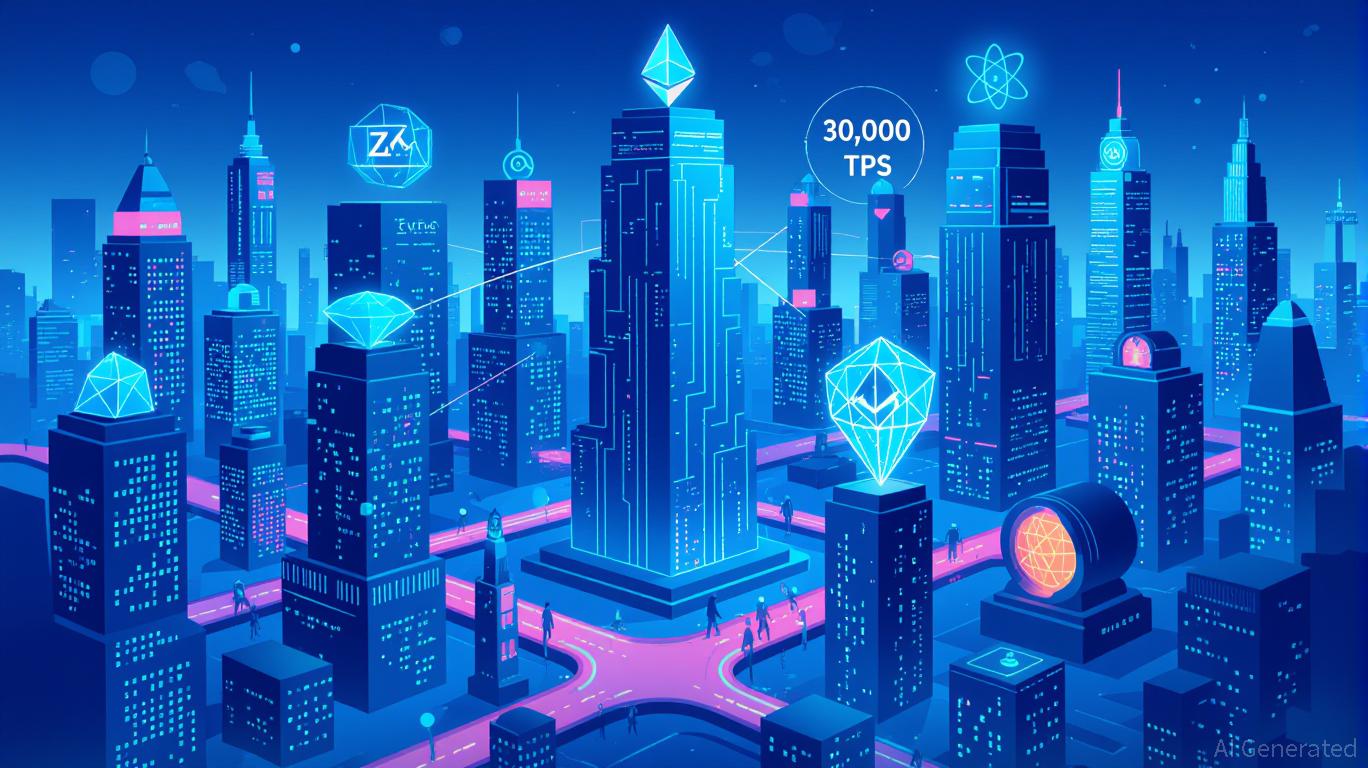
Zero-Knowledge rollups (ZK-rollups) have quickly become a leading method for enhancing blockchain scalability. By aggregating transactions off-chain and submitting cryptographic proofs to the main network, these solutions have significantly reduced transaction costs and improved processing speeds. For example, platforms like zkSync Era and StarkNet now handle over 43,000 transactions per second, cutting gas fees by 30% compared to traditional Layer 1 blockchains. This efficiency has attracted major financial players such as Goldman Sachs, Deutsche Bank, and JPMorgan, who are adopting ZK-based frameworks to ensure secure and compliant operations.

The total value locked (TVL) in ZK ecosystems has soared to $28 billion. Projects like Lighter have achieved 24,000 TPS while reducing proof generation expenses by more than 90%. ZK technology is also making waves outside of finance. Companies such as Nike and HSBC are investigating ZK solutions for NFT compliance and tokenized gold trading, while Sony is using ZK-rollups to enhance supply chain transparency. These advancements highlight ZK’s shift from niche applications to a foundational role in enterprise blockchain infrastructure.
Solving the Privacy and Scalability Dilemma
A key strength of ZK technology lies in its ability to balance privacy and scalability—two goals that have historically been at odds in blockchain design. Traditional blockchains often favor transparency, which can compromise user privacy, while privacy-centric protocols like Monero struggle to scale. ZK proofs allow for transaction verification without revealing confidential information, making ZK-rollups especially appealing for regulated sectors that must comply with data protection laws such as the EU’s GDPR.
The European Union has aligned its regulations with ZK’s privacy-focused approach, recognizing its potential to merge data protection with financial innovation. Additionally, ZK-based identity solutions are being implemented to safeguard digital credentials and combat fraud, showcasing the technology’s adaptability beyond decentralized finance.
Obstacles: Computational Demands and Trust Issues
Despite its advantages, ZK technology faces notable hurdles. Generating and verifying ZK proofs requires significant computational resources. The most common form, ZK-SNARKs, depends on complex operations like elliptic curve computations and hashing, which can be challenging for systems with limited processing power. While new protocols such as Plonky3 from Polygon aim to address these concerns, achieving optimal scalability remains an ongoing challenge.
Another major concern is the issue of trusted setup. ZK-SNARKs need an initial cryptographic ceremony to establish parameters, creating a potential vulnerability. If this process is compromised, the security of the entire system could be threatened. Although distributed setup methods are being developed to minimize reliance on a single trusted entity, this remains a critical point of fragility for ZK systems.
Furthermore, the balance between privacy and regulatory requirements is still delicate. While ZK proofs enable private transactions, they may conflict with anti-money laundering (AML) regulations in some regions. Achieving harmony between privacy and compliance will require thoughtful policy development and adaptable technical solutions.
Assessing the Future: Sustaining Growth and Overcoming Barriers
The future of ZK technology depends on its ability to resolve these challenges while preserving its unique benefits. Venture capital funding for ZK startups has surpassed $725 million since 2023, signaling strong belief in the sector’s promise. The ZKP market, valued at $1.28 billion in 2024, is expected to expand at a 22.1% annual rate, reaching $7.59 billion by 2033. However, this growth hinges on continued advancements in proof efficiency, hardware improvements, and broader industry adoption.
Institutional participation further validates ZK’s potential. With $3.3 billion secured in ZK-powered platforms and 35 major organizations exploring ZK-based solutions, the technology is moving beyond speculation. Nevertheless, due to ongoing scalability and computational challenges, ZK is unlikely to fully replace existing blockchains. Instead, it will serve as a complementary layer, supporting privacy-focused and high-throughput applications where they are most beneficial.
Conclusion: Redefining Blockchain’s Capabilities
Zero-Knowledge technology is more than just a tool for scaling—it marks a fundamental shift in how privacy, trust, and efficiency are approached in decentralized systems. Although obstacles remain, the combination of technical progress, institutional backing, and regulatory support suggests that ZK is poised for lasting impact. For investors, the challenge is to distinguish between short-term market swings and genuine long-term value. As ZK technology matures, it is set to reshape not only finance, but also identity management, supply chains, and even artificial intelligence infrastructure, according to industry experts.
Disclaimer: The content of this article solely reflects the author's opinion and does not represent the platform in any capacity. This article is not intended to serve as a reference for making investment decisions.
You may also like
Navigating the Emergence of Decentralized Finance (DeFi): A Tactical Handbook for Investors in 2026
- Aster DEX dominates 19.3% of perpetual DEX market by Q3 2025 with hybrid AMM-CEX model reducing slippage by 40% and $27.7B daily volume. - Platform bridges TradFi/DeFi through Binance/APX partnerships, aligning with MiCAR/CLARITY Act while securing $50B in Layer-2 assets via ZKP-powered Aster Chain. - ASTER token surged 1,650% post-TGE with $80M burns and 80% margin trading driving 30% price jumps, while 2026 roadmap targets RWA integration and institutional onboarding. - Projected 72.8% CAGR in RWA mark

Investment Prospects in STEM Learning and Workforce-Ready Talent Streams: Linking with Astar 2.0
- Global STEM education demand surges as AI, blockchain, and biotech reshape industries, creating workforce skill gaps. - Astar 2.0's DeFi innovations (ZK Rollups, interoperability) indirectly support STEM through blockchain infrastructure and cross-chain collaboration. - U.S. and Singapore prioritize tech-integrated workforce strategies, aligning with Astar 2.0's potential to bridge DeFi and STEM education via scalable tools. - Investors can leverage Astar 2.0's $1.399B TVL and hybrid AMM-CEX model to fun

The Influence of Vitalik Buterin's Support for ZKsync on the Advancement of Scalable Blockchain Technologies: Evaluating the Prospects for Long-Term Investment in Pr
- Vitalik Buterin's 2025 endorsement of ZKsync accelerated its rise as a scalable Ethereum Layer-2 solution with 30,000 TPS and $3.3B TVL. - ZKsync's EVM compatibility and institutional partnerships contrast with StarkNet's quantum-resistant STARK proofs and Aztec's privacy-first architecture. - Analysts project ZK token prices at $0.40–$0.60 by 2025, while StarkNet faces adoption barriers and Aztec navigates regulatory challenges in privacy-focused DeFi. - The $7.59B ZKP market (2033 forecast) hinges on b
ZK Atlas Enhancement: Transforming Blockchain Scalability and Paving the Way for Institutional Integration
- ZKsync’s 2025 Atlas Upgrade achieves 15,000–43,000 TPS with $0.0001/transaction costs, boosting blockchain scalability for institutions. - Deutsche Bank , Sony , and Citi adopt ZKsync for tokenized assets and privacy-driven transactions, citing compliance and efficiency gains. - Market forecasts predict 60.7% CAGR for ZK Layer-2 solutions through 2031, with Fusaka upgrade targeting 30,000 TPS to solidify ZKsync’s leadership.
Trending news
MoreCrypto prices
More





