
BlackRock Predicts a Tokenized Future for Global Markets

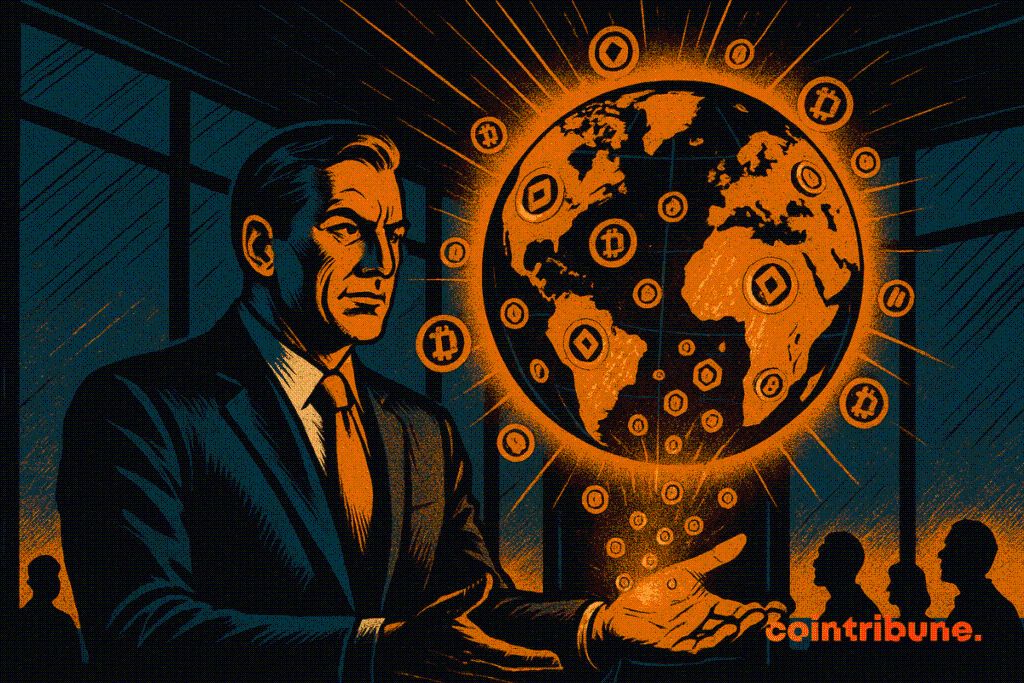
BlackRock CEO Larry Fink and COO Rob Goldstein believe tokenization is approaching a decisive turning point. In a new essay for The Economist, they compare its potential to the early internet, arguing that digital asset representation could fundamentally modernize global financial markets.
In brief
- BlackRock CEO Larry Fink and COO Rob Goldstein say tokenization is entering an “early internet era” and could transform global markets faster than expected.
- Real-world asset tokenization has grown over 300% in the past 20 months, signaling accelerating institutional adoption.
- BlackRock’s own tokenized money-market fund BUIDL has surpassed 2 billion USD in value, highlighting early real-world demand.
- Fink and Goldstein argue that tokenization will streamline settlement, increase transparency and eventually allow investors to hold all asset types in a single digital wallet.
Tokenization Enters Its “Early Internet” Phase
BlackRock’s executives describe tokenization as the newest step in a decades-long evolution of financial infrastructure. From phone-based trading in the 1970s to the introduction of SWIFT in 1977 and the emergence of blockchain technology in 2009, each milestone accelerated settlement and improved transparency.
Tokenization takes this transformation further by placing almost any asset on a shared digital ledger. Fink and Goldstein argue that this shift could expand the universe of investable assets far beyond today’s listed stocks and bonds. While tokenization was long overshadowed by the speculative crypto boom, traditional institutions now recognize its practical value.
Rapid Growth Shows Momentum Behind Real-World Assets
Tokenized real-world assets remain a small share of global markets but are growing quickly. According to BlackRock, the segment has expanded by roughly 300 percent in just 20 months. Adoption is particularly strong in emerging markets where traditional banking systems are less accessible.
BlackRock is already building in this direction. Its tokenized U.S. Treasury fund, BUIDL, now exceeds 2 billion dollars in value locked and operates fully on public blockchains. The firm has also strengthened its digital-asset footprint through its spot Bitcoin and Ethereum ETFs, which together dominate the market with more than 75 billion dollars in net inflows.
A Bridge Between Traditional and Digital Finance
Fink and Goldstein emphasize that tokenization is not a replacement for the existing system but a bridge connecting traditional finance and digital-first innovators. In their view, investors may eventually hold all asset types, from stocks and bonds to tokenized products, within a single digital wallet.
Two advantages could drive this shift. Instant settlement would drastically reduce counterparty risk across global markets. Meanwhile, digitizing private-market processes could reduce costs, simplify execution, and make historically illiquid holdings more accessible.
To support this evolution, the executives call on regulators to update existing frameworks rather than design entirely new ones. As they put it, a bond remains a bond even if it lives on a blockchain. They stress the need for clear investor protections, strong risk-management standards, and modern digital-identity systems.
Conclusion: Tokenization and the Rise of Real-World Assets
BlackRock’s leadership sees tokenization entering a decisive phase, one that could reshape global markets much like the early internet. The rapid adoption of tokenized real-world assets (RWA) , which have expanded by roughly 300 percent in less than two years, highlights the accelerating shift toward digital representations of traditional value.
With products like BlackRock’s BUIDL fund, traditional assets are already moving onto blockchain rails. This shift replaces slow, paper-driven processes with programmable digital infrastructure that is more efficient and easier to verify.
If regulation evolves in step with this technology, tokenization could become a core building block of the financial system. It would bridge traditional institutions with digital-first platforms and make markets more transparent, accessible, and resilient. Real-world asset tokenization is no longer experimental. It is becoming one of the clearest signs that global finance is preparing for its next major transformation.
Disclaimer: The content of this article solely reflects the author's opinion and does not represent the platform in any capacity. This article is not intended to serve as a reference for making investment decisions.
You may also like
ZEC's Rapid Surge: How Institutional Infrastructure Investments Play a Part
- Zcash (ZEC) surged 700% in 2025 as institutional crypto investments hit $25B, driven by privacy demand and infrastructure-linked strategies. - Regulatory clarity and tokenized asset innovation enabled $25B RWA market growth, linking crypto to real-world infrastructure projects like NY’s Xerox campus redevelopment. - Institutional buyers (Cypherpunk, MaelstromFund) acquired 1.43% of ZEC supply, mirroring infrastructure investments in brownfield upgrades and industrial clusters. - The November 2025 halving

Zcash (ZEC) Price Fluctuations: Regulatory Changes and Infrastructure Developments Fueling a New Era for Privacy Coins
- Zcash (ZEC) surged nearly 900% in Q4 2025 due to regulatory clarity, institutional adoption, and infrastructure upgrades. - The U.S. CLARITY Act and $137M Grayscale ETF, plus $18M Cypherpunk investment, boosted institutional confidence in ZEC’s opt-in privacy model. - Orchard protocol upgrades and Ztarknet’s Layer-2 rollup enhanced Zcash’s DeFi utility while preserving privacy, attracting 4.5M shielded ZEC. - However, EU regulatory uncertainty and governance debates over privacy vs. compliance pose risks
Goldman Sachs to Acquire Innovator Capital, Expanding Crypto-Linked ETF Offerings
Avalanche (AVAX) To Rise Higher? Key Bullish Pattern Formation Suggest So!

Trending news
MoreCrypto prices
More






