
Blockchain’s $6.8 Billion Bet: Will Advancements Outpace Its Security Risks?
- Terminal Finance's collapse exposed blockchain fintech vulnerabilities from delayed tech adoption and security flaws, triggering sector-wide scrutiny. - Naver-Upbit's $6.8B AI-blockchain merger faces challenges after Upbit's $36M Solana breach, mirroring 2019 North Korean-linked attacks. - Balancer's $116M hack revealed systemic DeFi risks, with debates over audit efficacy despite 11 prior security reviews. - Binance's legal troubles and BNB's price slump highlight market skepticism, while initiatives li
Terminal Finance Collapse Shakes Blockchain and Fintech Industries
The sudden downfall of Terminal Finance has sent ripples throughout the blockchain and financial technology landscapes, revealing significant weaknesses stemming from slow tech upgrades and security oversights. The company’s unexpected closure, triggered by a major breakdown in its decentralized lending systems, has brought to light the broader risks facing the sector. This comes as leading firms such as Naver and Upbit invest a combined $6.8 billion into artificial intelligence and blockchain infrastructure, aiming to build a new era of financial services. However, these ambitions are now under scrutiny following a $36 million security breach involving Upbit’s Solana hot wallet, which occurred just days after a major merger—one of South Korea’s largest fintech consolidations.
Upbit, the country’s top cryptocurrency exchange, recently suffered a hack reminiscent of a 2019 incident attributed to North Korean cybercriminals. This event has raised doubts about the preparedness of large-scale blockchain integrations. While Naver’s CEO has highlighted the promise at the intersection of blockchain and advanced AI, the breach has forced Dunamu, Upbit’s parent company, to issue a public apology and pledge to reimburse affected users. These developments come amid stalled efforts to regulate stablecoins in South Korea, where competitors like Kakao are racing to launch won-backed stablecoins but continue to face regulatory obstacles.
DeFi Security Under the Microscope
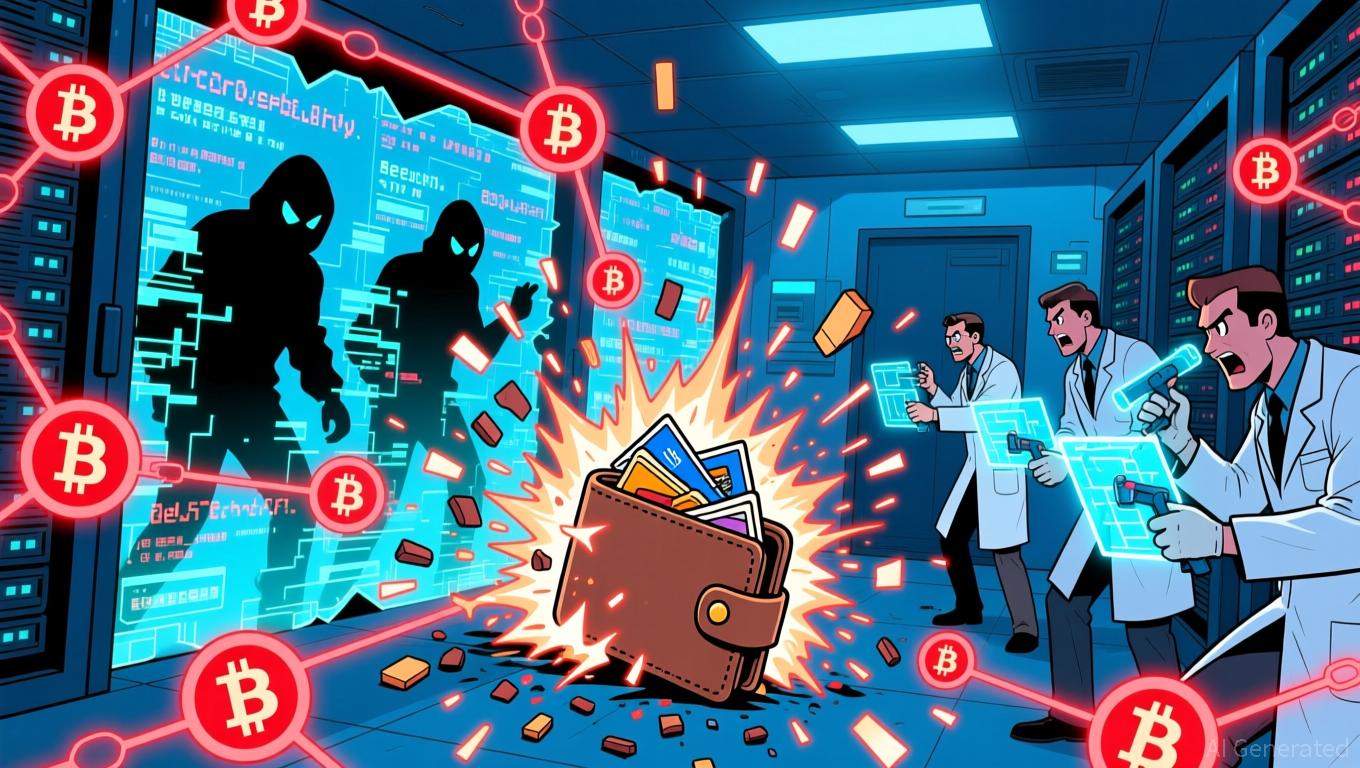
In November 2025, the Balancer protocol experienced a $116 million exploit, exposing deep-rooted vulnerabilities within decentralized finance (DeFi). The community has since debated a proposal to distribute $8 million in recovered assets to impacted liquidity providers, sparking discussions about the effectiveness of security audits and the importance of compensating users in the same assets they lost. Despite undergoing 11 separate audits, the protocol fell victim to a sophisticated attack that exploited a flaw in its Stable Pools’ rounding function, demonstrating that even extensive reviews can miss critical issues.
Wider Market Instability and Regulatory Pressures
The collapse of Terminal Finance is part of a larger trend of instability in the digital asset market. Binance, already under investigation for alleged involvement in transactions linked to Hamas, now faces legal action from victims of the October 7 attacks, further intensifying regulatory scrutiny. Meanwhile, Binance Coin (BNB) continues to trade below $900, and on-chain activity has declined, reflecting growing investor skepticism about the direction of blockchain technology.
Signs of Resilience and Ongoing Challenges
Despite these setbacks, some projects are pushing forward with innovative solutions. Mutuum Finance is introducing a dual-lending model and advancing its security through audits by Halborn, aiming to better manage liquidity risks. Telegram’s Cocoon project is developing a decentralized AI network to address concerns over centralization. Nevertheless, the recent cancellation of CarTrade Tech’s planned merger with Girnar Software highlights the persistent uncertainty and strategic shifts within the fintech sector.
The Path Forward: Balancing Progress and Protection
The future of blockchain and fintech hinges on the delicate balance between innovation, regulatory oversight, and robust security. While the ambitious AI-blockchain initiatives led by Naver and Upbit have the potential to transform financial systems, the Terminal Finance episode serves as a stark reminder that addressing technical flaws and closing regulatory gaps is essential for the industry’s long-term stability and growth.
Disclaimer: The content of this article solely reflects the author's opinion and does not represent the platform in any capacity. This article is not intended to serve as a reference for making investment decisions.
You may also like
Bitcoin News Update: Krugman Links Bitcoin's Decline to Waning 'Trump Trade' Hype
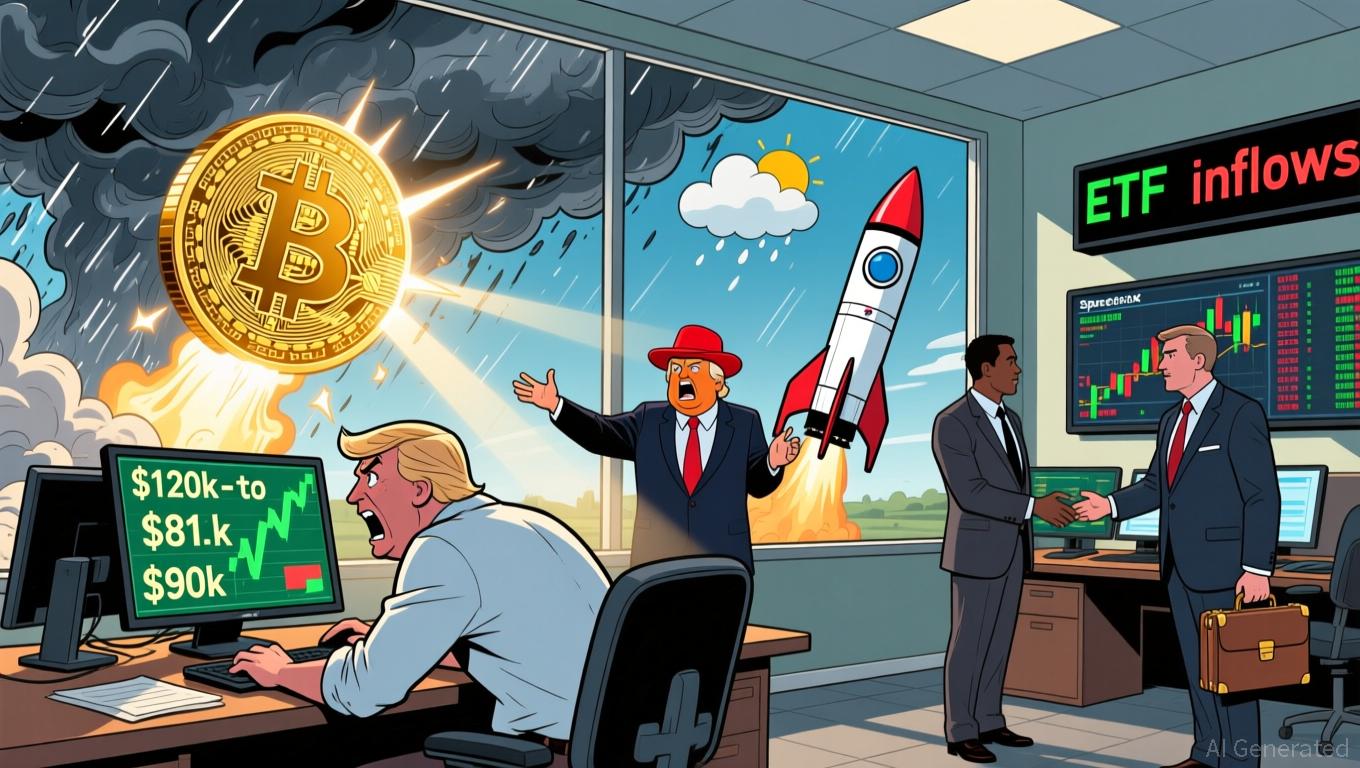
- Bitcoin's 30% drop from October peak linked to fading "Trump trade" speculation, per Nobel laureate Paul Krugman, who frames it as speculative rather than stable value. - BlackRock's IBIT ETF regained $3.2B profit post-$90K rebound, while SpaceX's $105M BTC transfer sparks custodial strategy debates amid market volatility. - Naver's $10B Dunamu acquisition and corporate Bitcoin treasury moves highlight institutional crypto integration, despite $19B industry selloff and regulatory challenges. - Prediction
Bitcoin News Today: "Conflicting Whale Strategies Cast Uncertainty on Bitcoin's Path to $100K"
- Bitcoin's drop below $100,000 coincided with mixed whale strategies, including accumulation, shorting, and exchange deposits, signaling uncertain market direction. - Ethereum whales used 16.08 million DAI to buy 5,343 ETH at $3,010, while Bitcoin whales deposited 9,000 BTC, potentially signaling selling preparation. - Derivatives markets showed conflicting bets, with a $91M BTC short and $36.4M long flip, while ETF inflows ($84M total) hinted at institutional confidence amid macroeconomic risks. - Analys
Exchanges Call on SEC: Deny Exemptions to Maintain Fairness in the Market
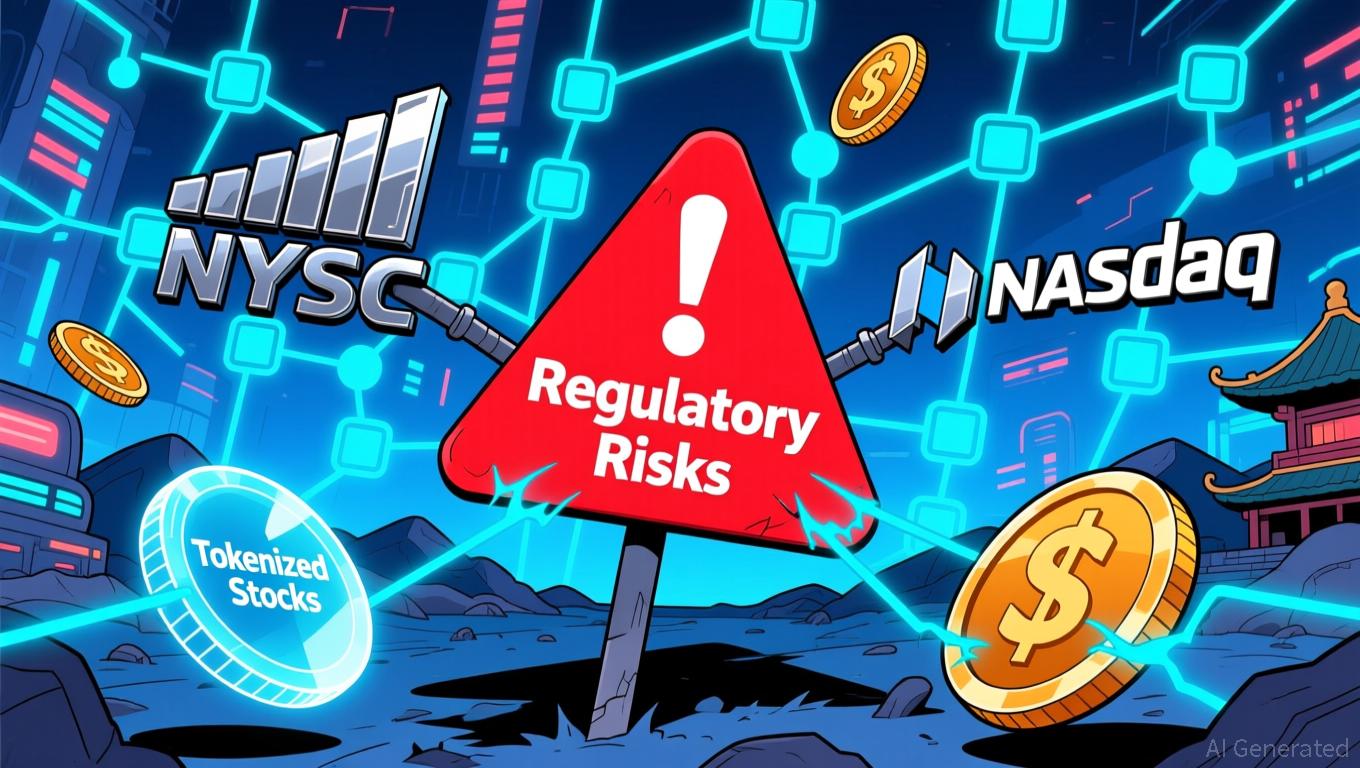
- WFE warns SEC against broad crypto exemptions for tokenized stocks, citing risks to investor protections and market integrity. - Tokenized stocks lack dividend rights, voting access, and custody frameworks, creating "mimicked products" with weaker safeguards. - SEC's sandbox-style exemptions risk regulatory arbitrage, allowing crypto platforms to bypass rules enforced on traditional exchanges. - Global bodies like IOSCO warn tokenization amplifies data integrity and custody risks, urging unified standard
Decentralized AI Network Cocoon Takes on Centralized Titans with a Privacy-Centric Approach
- Telegram founder Pavel Durov launched Cocoon, a TON-based decentralized AI network enabling GPU owners to earn cryptocurrency by processing private AI requests. - The platform challenges centralized providers like Amazon and Microsoft by using Trusted Execution Environments (TEEs) to ensure secure, verifiable model execution with user data privacy. - Cocoon connects GPU providers with developers for confidential tasks, reducing reliance on costly intermediaries while aligning with ethical AI principles t
Trending news
MoreCrypto prices
More





