
Here’s Why Ethereum Emerges As The Global Capital Rails For On-Chain Finance

In the rapidly evolving landscape of digital finance, Ethereum is quickly establishing itself as the primary infrastructure for global on-chain capital markets. From tokenized bonds and money market funds to institutional liquidity rails, the world’s capital is beginning to migrate to an ecosystem where transactions are programmable, auditable, and borderless.
Why Is Ethereum Chosen As The Default Choice For Global Rails
The global capital markets are moving on-chain to Ethereum because it is credibly neutral. ETH has never experienced downtime, and it possesses the economic security necessary to support the world’s financial system. Investor and founder of GM42NFT, Captain GM, has stated that ETH is not fast enough to support trading because it wasn’t built for it.
However, the attempts to build a genuinely fast on-chain trading environment have consistently led teams to centralize significant parts of the trading system. This move creates security, reliability, and neutrality concerns for a system designed to be global. These compromises are in direct conflict with the very benefits that ETH provides, and make it the chosen blockchain for global finance.
This is where Raya Network steps in to solve these issues at the core. Raya is delivering a decentralized exchange (DEX) with institutional-grade execution speed and Ethereum-level security. It’s a platform that is as fast as TradFi and remains simultaneously secure, reliable, and credibly neutral as exactly DeFi should be. “Fast is easy, decentralized is hard, and it’s only Reya that does both,” Captain GM noted.
Analyst Alucard mentioned that the Raya network has become one of the few projects that genuinely solves the speed and security problem. The sub-millisecond execution speeds, trades are fully verified on ETH, and there’s no dependence on a single sequencer. This is an engineered combination designed for real progress in the space.
However, over 45% of the token supply is allocated to the community. Reya, combined with the ETH buyback mechanism, creates an ecosystem that’s aligned both technically and economically. They’re building something fast and secure, and because of that, Reya sits in a different category.
Why Reya’s Design Feels More Like A New Standard Than Another DEX
A trader and ambassador of Somnia, Onur, has also explained that his experience with Reya feels like a full redesign of on-chain execution rather than a small improvement. It offers sub-millisecond fills, unified margin, Ethereum security with ZK settlement, and smooth flow through EigenDA.
According to Onur, the peer-to-pool model keeps trades consistent, efficient, and free from bottlenecks or hidden edges. As a result of this approach, Reya isn’t just another venue anymore, and it’s actively becoming the new execution standard for DeFi.

Disclaimer: The content of this article solely reflects the author's opinion and does not represent the platform in any capacity. This article is not intended to serve as a reference for making investment decisions.
You may also like
Privacy Coins and Market Fluctuations: Uncovering the Factors Behind ZEC's Latest Price Jump
- Zcash (ZEC) surged 700% in late 2025 driven by institutional backing and network upgrades like the Zashi wallet. - Regulatory pressures and market fragmentation intensified as exchanges delisted privacy coins and liquidity shifted to decentralized platforms. - ZEC's volatility reflects macroeconomic tailwinds and speculative demand, but its long-term viability hinges on balancing privacy with regulatory compliance. - Institutional adoption of privacy coins accelerated in 2025, yet fragmented markets and
Why Dash (DASH) Is Soaring as Institutions Embrace It and Privacy Concerns Fuel Demand
- Dash (DASH) surged 150% in June 2025, driven by institutional adoption and privacy-focused demand. - Institutional ownership reached 90.64% after AGF Management's $7.79M investment and DoorDash's $450M partnership. - Dash Platform 2.0 enhanced scalability while PrivateSend usage grew 25% YoY amid rising privacy needs. - Regulatory challenges persist under EU MiCA and SEC scrutiny, prompting multi-jurisdictional compliance strategies. - DeFi integration and Latin American adoption expanded DASH's utility
ZK Atlas Upgrade: Pioneering the Future of Blockchain Infrastructure for Enhanced DeFi Scalability
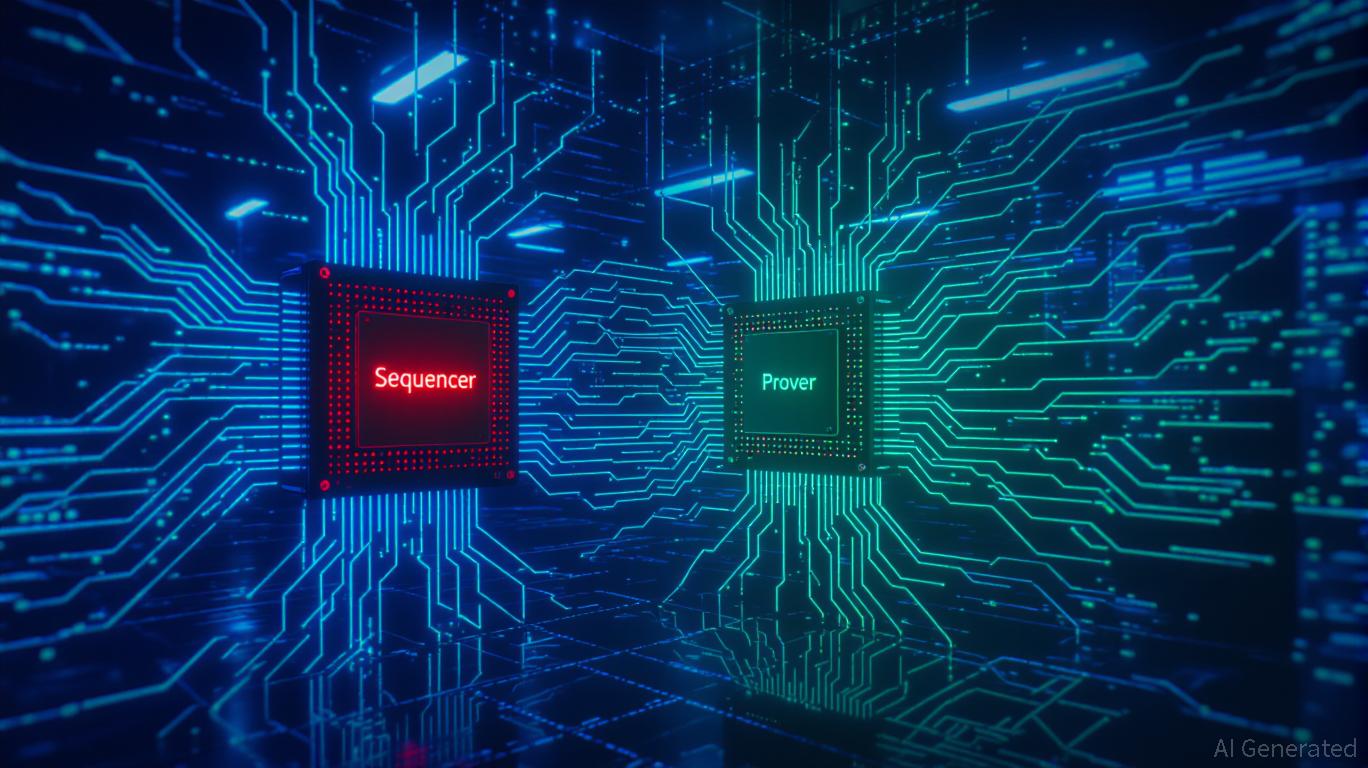
- ZKsync's 2025 Atlas Upgrade revolutionizes DeFi scalability via zero-knowledge rollups, boosting transaction throughput to 43,000 TPS and slashing costs to $0.0001 per transfer. - Modular architecture with Atlas Sequencer and Airbender Prover enables real-time execution, while zkSync OS supports EVM/WASM compatibility and cross-chain liquidity unification. - Post-upgrade DeFi metrics show 300% transaction volume growth and $0.28–$1.32 ZK token price projections, positioning ZKsync as a key Layer 2 infras
Bloomberg: Power Theft Exceeds $1 Billion as Malaysia Bitcoin Mining Rigs Overwhelm
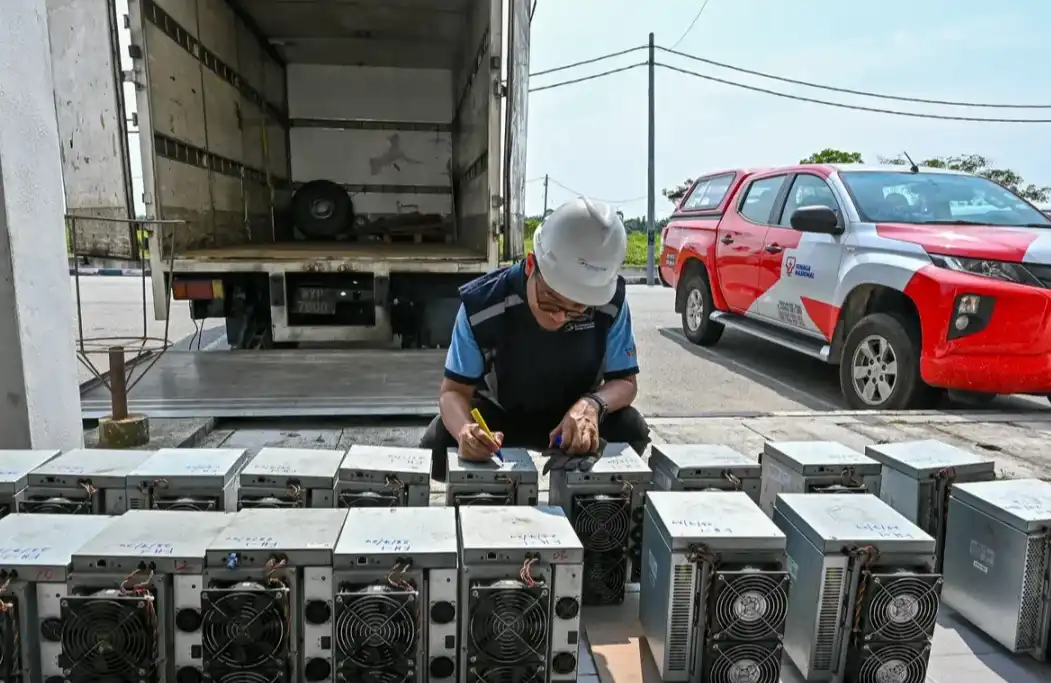
Malaysia has uncovered approximately 14,000 illegal cryptocurrency mining sites in the past five years, causing the state-owned power company losses of over $1.1 billion. In response, the local government established a special committee in November 2025 to consider a total ban on mining,
Trending news
MoreCrypto prices
More





