
"Trump Halts Afghan Immigration as Courts Challenge Guard Deployments in Security vs. Sovereignty Clash"
- Afghan suspect Rahmanullah Lakanwal, who attacked U.S. National Guard members near the White House, entered via Biden's 2021 Operation Allies Welcome (OAW) program after CIA collaboration in Afghanistan. - OAW's security vetting faced scrutiny as 55 evacuees later appeared on terrorism watch lists, with DOJ acknowledging process flaws including data errors and rushed timelines. - Trump administration halted Afghan immigration "indefinitely" post-attack, while courts ruled National Guard deployments in D.
Shooting Near White House Sparks Debate Over Afghan Resettlement Program
An Afghan national, Rahmanullah Lakanwal, is accused of shooting two National Guard members close to the White House in Washington, D.C. Lakanwal, who was injured during the incident and subsequently detained, had previously assisted the CIA in Afghanistan. He entered the United States in 2021 through the Biden administration’s Operation Allies Welcome (OAW), a program created to help at-risk Afghans after the Taliban regained control of Afghanistan.
This event has reignited controversy regarding the vetting procedures for evacuees and intensified political disputes about the OAW initiative.
Operation Allies Welcome: Background and Security Concerns
Launched in August 2021, Operation Allies Welcome aimed to grant humanitarian parole to Afghans facing potential retribution for supporting U.S. operations. The Department of Homeland Security emphasized that evacuees underwent extensive biometric and background checks, involving multiple intelligence and law enforcement agencies. Despite these efforts, the Department of Justice’s Office of Inspector General later reported flaws in the process, such as data errors and the rushed nature of the evacuation, which heightened the risk of admitting individuals with possible terrorist links.
A report released in 2024 revealed that 55 evacuees were later found on terrorism watch lists, though the FBI determined that most did not pose a significant threat.
Political Fallout and Increased Security Measures
Lakanwal’s arrest has become a flashpoint for political criticism, particularly from former President Trump’s administration. In response to the shooting, Trump indefinitely suspended all Afghan immigration requests and denounced the attack as a “crime against humanity.” He also accused the Biden administration of allowing millions of unvetted foreigners into the country, a statement widely regarded as exaggerated.
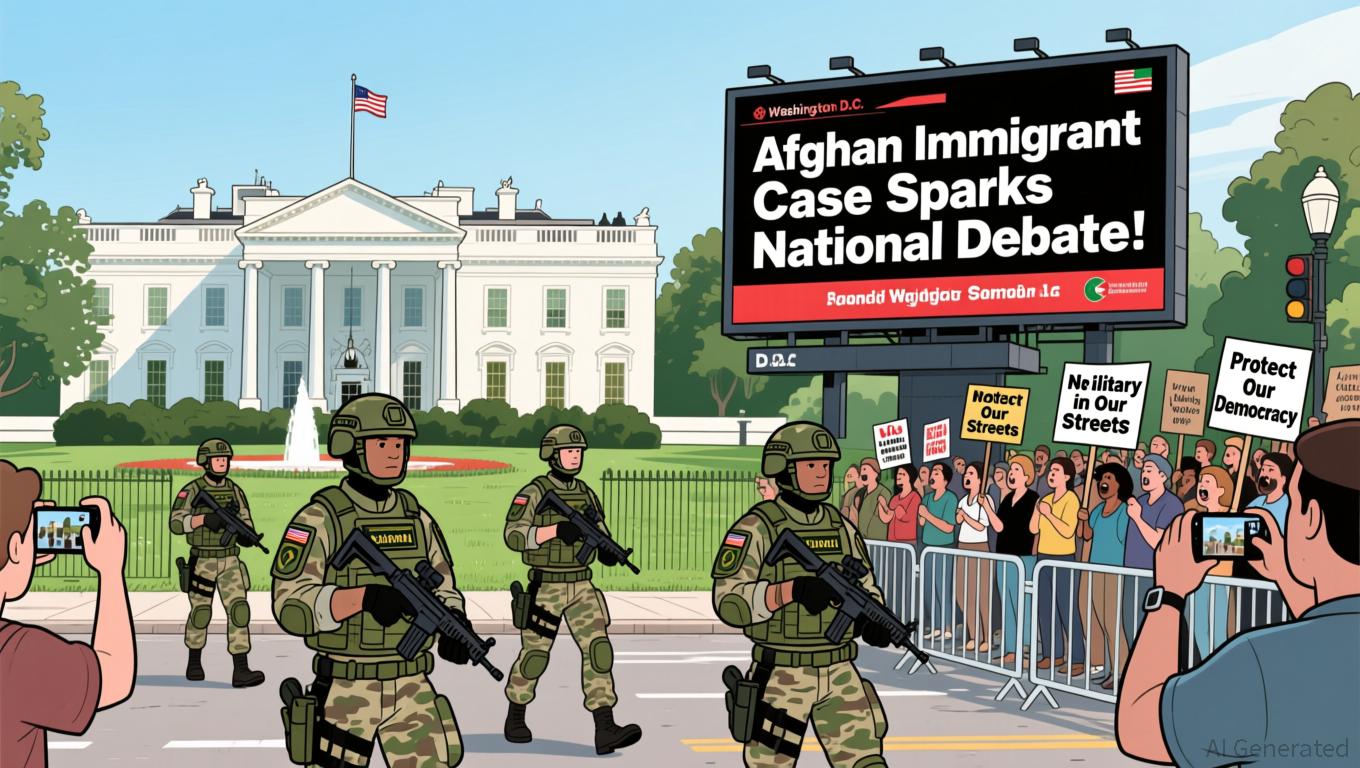
To address security concerns, the administration has sent an additional 500 National Guard troops to Washington, D.C., raising the total deployment to over 2,200 as part of a broader anti-crime initiative. Similar troop deployments in cities such as Los Angeles, Chicago, and Portland have faced legal scrutiny regarding the use of military forces for domestic policing.
Legal Disputes Over National Guard Deployment
The deployment of National Guard troops has sparked legal challenges, with D.C. Attorney General Brian Schwalb filing a lawsuit against the federal government. He argues that the deployment infringes on the District’s right to self-governance. A federal judge recently ruled the deployment unconstitutional, citing concerns over congressional authority in D.C. The Trump administration has pledged to appeal, insisting the troops are necessary to protect federal property and combat crime. Critics, however, caution that increased militarization of American cities could undermine democratic principles and public confidence.
Afghan Resettlement and Ongoing Uncertainty
The incident has also drawn attention to the uncertain situation faced by Afghans in the U.S. More than 190,000 Afghans have arrived under OAW and its follow-up program, Operation Enduring Welcome, but many remain in limbo as they await asylum or immigration decisions. Veterans and advocacy organizations have called on the administration to honor its commitment to those who supported U.S. missions, stressing the ethical responsibility to protect individuals who risked their lives for American interests.
Looking Ahead: Balancing Security and Humanitarian Commitments
As authorities continue to investigate Lakanwal’s motives, the shooting has highlighted the complex relationship between national security, immigration policy, and political discourse. The Trump administration’s response—expanding military presence while halting Afghan immigration—signals a tough stance on domestic security, even as courts and local officials challenge what they view as federal overreach. The outcomes of ongoing legal battles and the future of Afghan resettlement programs are expected to shape the national conversation on balancing public safety with humanitarian responsibilities in the coming years.
Disclaimer: The content of this article solely reflects the author's opinion and does not represent the platform in any capacity. This article is not intended to serve as a reference for making investment decisions.
You may also like
AAVE Climbs 1.1% Amid Whale Movements and Anticipation for V4 Update
- A major whale transferred $59.34M to Aave V3 from Kraken, boosting AAVE token holdings to 310,617 and signaling confidence in decentralized liquidity. - Aave partners with Babylon to enable native BTC-backed lending via trustless vaults in 2026, aiming to unlock deeper Bitcoin liquidity in DeFi without custodial intermediaries. - Aave DAO is streamlining multi-chain strategy by phasing out zkSync/Metis deployments, prioritizing chains with $2M+ annual revenue to enhance financial sustainability. - AAVE t

Uber and Avride introduce autonomous taxi service in Dallas

Trending news
MoreCrypto prices
More






