
Patrick Witt Takes Lead on Crypto Policy in Trump Administration

- Witt takes over cryptocurrency agenda in the US
- Stablecoin law and Bitcoin reserve are the focus
- Trump wants to accelerate regulatory framework for cryptocurrencies
Patrick Witt, the White House's new cryptocurrency policy chief, stepped in to push for sector regulation under current U.S. President Donald Trump. Acting under David Sacks, Witt replaces Bo Hines and takes on the mission of advancing the crypto agenda, including the implementation of the GENIUS Act, which regulates stablecoins, and the formation of a federal Bitcoin reserve.
In his first interview in office, Witt stated that his priority is to advance the market framework for digital assets currently under discussion in the Senate. He described the latest text as a "significant improvement," and is expected to pass with bipartisan support, similar to the GENIUS Act.
The proposal aims to unify regulatory understanding between the Banking and Agriculture Committees, which have yet to finalize their reports. According to Witt, the White House is in direct contact with both groups, pushing for the legislation to reach the floor quickly.
Meanwhile, the Trump administration is working on creating a Bitcoin Strategic Reserve, initially composed of seized BTC. The intention is to maintain the assets as a federal store of value in the long term. Bitcoin is currently trading at $111.479,47, and the Treasury Department is studying how to legally structure this fund.
"It's a top priority for me personally, for this office, for the administration," Witt stated. He noted that there are still unprecedented legal issues to resolve, but emphasized that there is an active effort to draft legislation that would formalize the federal cryptocurrency reserve.
With prior experience at the Department of Defense, McKinsey & Co., and the Office of Personnel Management, Witt presents himself as a liaison prepared to coordinate with regulators in implementing the new guidelines. He also downplayed criticism of potential conflicts of interest involving Trump, arguing that the crypto agenda represents structural benefits for the U.S. economy.
Disclaimer: The content of this article solely reflects the author's opinion and does not represent the platform in any capacity. This article is not intended to serve as a reference for making investment decisions.
You may also like
Mars Morning News | After the Ethereum Fusaka upgrade, the blob base fee surged by 15 million times
Multiple blockchain industry updates: a Bitcoin OG wallet transferred 2,000 BTC; Cloudflare outage was not caused by a cyberattack; the DAT bubble has burst; Ethereum Fusaka upgrade fees have surged; LUNC has risen over 80% intraday. Summary generated by Mars AI. This summary was generated by the Mars AI model, and the accuracy and completeness of its content are still under iterative improvement.

Drones, Fake Birdsong, and Broken Glass Traps: Malaysia is Undergoing an Unprecedented "Bitcoin Crackdown"
The Malaysian government is intensifying its crackdown on illegal bitcoin mining, utilizing technologies such as drones and sensors to uncover numerous operations, with electricity theft causing significant losses. Summary generated by Mars AI. The accuracy and completeness of the content generated by the Mars AI model are still in the process of iterative improvement.

Bitwise CIO: Stop Worrying, MicroStrategy Won't Sell Bitcoin
There are indeed many concerns in the crypto industry, but MicroStrategy selling bitcoin is definitely not one of them.

A 6200-fold profit: Who is the biggest winner of Moore Threads?
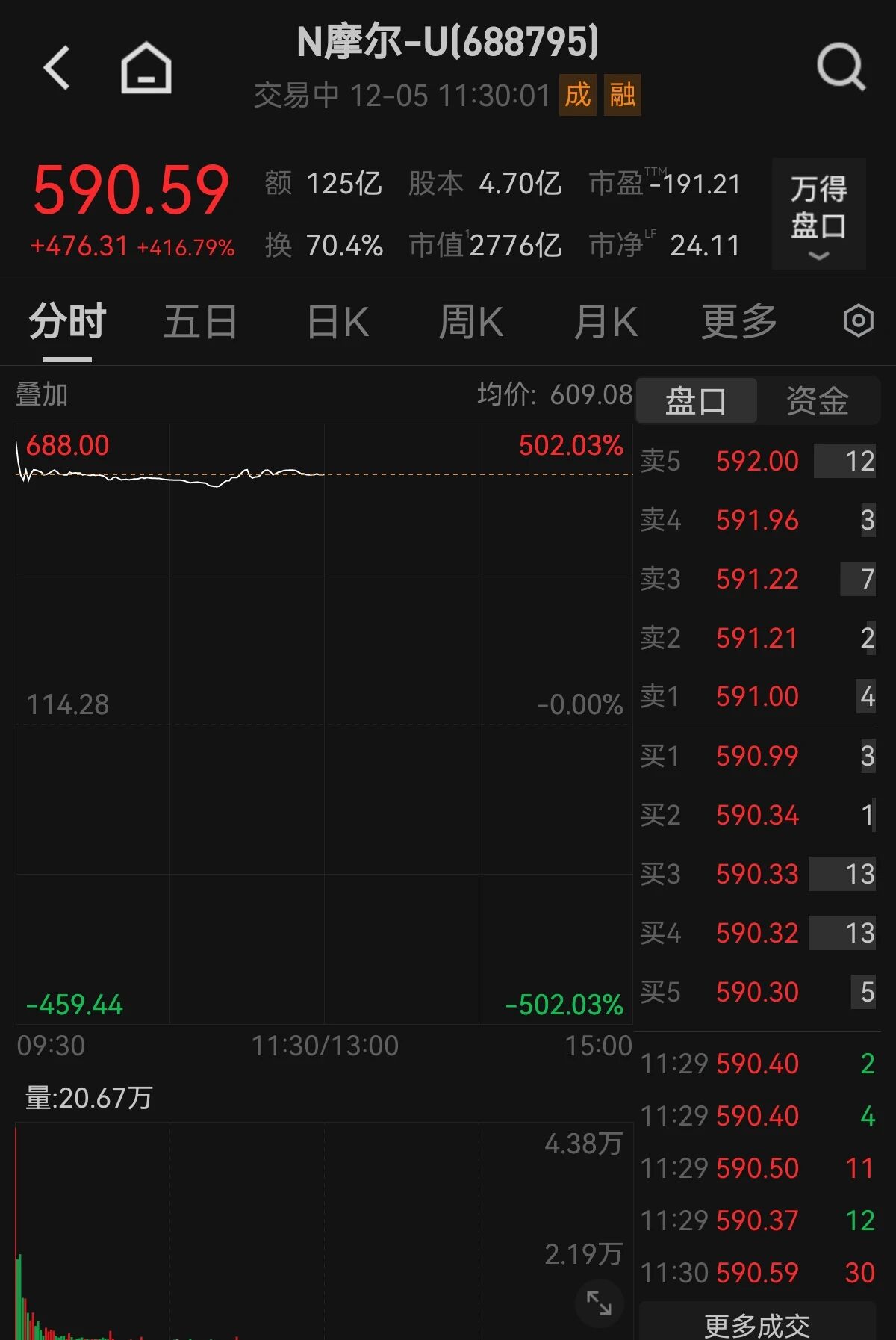
On December 5, Moore Threads officially debuted on the STAR Market, opening at 650 yuan, a surge of 468.78% compared to its issue price of 114.28 yuan.
Trending news
MoreCrypto prices
More





