
Flat Tax Hike Under Discussion In French Government

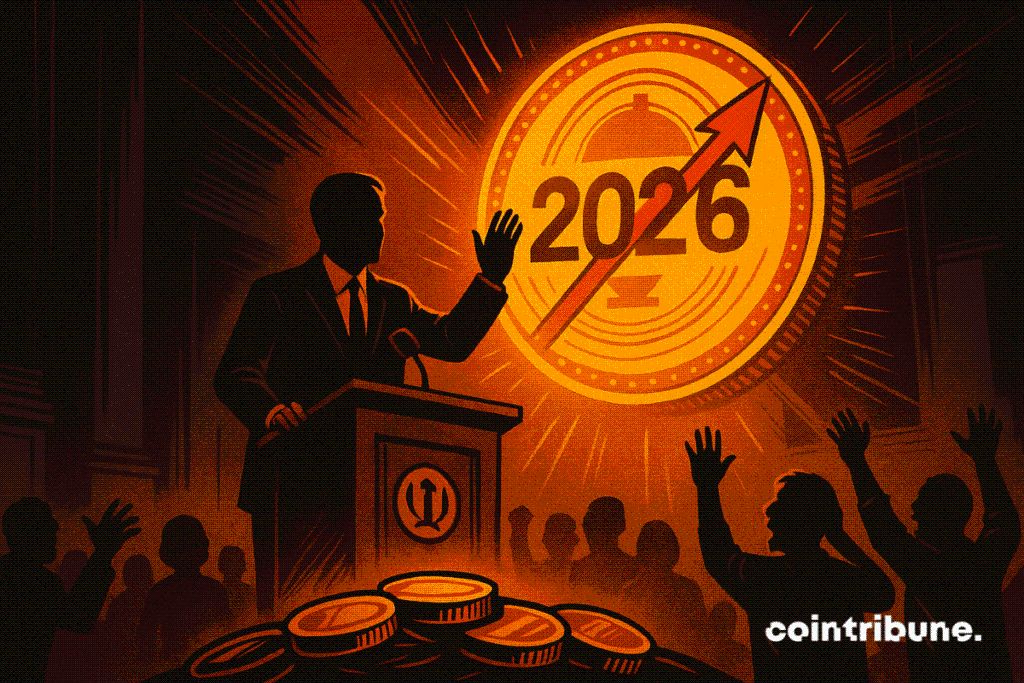
The prospect of an increase in the flat tax resurfaces in budget discussions. Ahead of the 2026 finance bill, Bercy would consider raising the single flat tax, set since 2018 at 30 %. No decision has been made yet, but the return of this measure, long considered a fiscal marker of Macronism, is already causing tensions. In a context of structural deficit and revenue pressures, the stability of the savings tax framework could be called into question.
In brief
- The government is considering an increase in the flat tax as part of the 2026 budget, with a rate that could rise from 30% to 36%.
- This scenario, still undecided, aims to generate up to 1.44 billion euros in revenue to reduce the public deficit.
- This measure would challenge a fiscal pillar of Macron’s term, causing tensions within the majority itself.
- Economic circles warn of a fiscal shock risk that could weaken investment and confidence.
A budgetary measure considered for 2026
While the situation becomes very worrying for France , the idea of raising the PFU from 30 % to 33 %, or even up to 36 %, is among scenarios discussed in preparing the 2026 budget. At this stage, it is only a hypothesis studied by the government.
This is a prospect that comes back on the table, even if nothing has been decided. The objective is to mobilize new revenues to contain the public deficit, expected to be 4.7 % of GDP in 2026. Indeed, each percentage point increase of the flat tax would bring about 240 million euros, which would raise potential gains to more than 1.4 billion euros if the rate reached 36 %.
This scenario, although undecided, already fuels speculation. Since its establishment in 2018, the PFU at 30 % embodies an economic approach favorable to investment and tax simplicity. Its possible reconsideration thus represents a strategic turning point.
However, opinions differ. Some members of the majority fear “breaking a strong symbol of Macron’s term”, while others argue for a revision to meet budgetary imperatives. Several technical arguments support this reopening of the file :
- An increase of 3 points (from 30 % to 33 %) would generate about 720 million euros more ;
- A rise to 36 % would bring nearly 1.44 billion euros per year, according to internal estimates ;
- The flat tax remains lower than the tax burden on savings income in other European countries, which fuels debate on its social legitimacy ;
- Some in the majority believe that large capital holders can contribute more without harming the overall economic climate.
Increasing pressure around high net worth individuals and tax loopholes
Beyond the flat tax, it is the entire capital taxation that could be reconsidered in the coming months. The budget debate for 2026 fits into a broader dynamic, where other levers are also mentioned.
Among them, the highly publicized “Zucman tax”, a 2 % contribution on wealth exceeding 100 million euros, reappears as an alternative or complement to raising the PFU. Although this tax was rejected by the Senate after adoption by the Assembly, it remains politically active. In parallel, reflections are underway on tightening certain tax loopholes and possibly reducing exemptions overseas, within the framework of the LODEOM scheme.
The equation is delicate. The government intends to avoid a fiscal shock already denounced by several business representatives, notably the AFEP, which warns about the effects of such a shift on competitiveness, investment, and employment.
Prime Minister Sébastien Lecornu has, for his part, closed the door on a return of the wealth tax (ISF), while maintaining a trajectory of budget consolidation. In this context, raising the PFU could be seen as an intermediate compromise, politically less explosive but not without economic consequences.
For savers, an increase in the flat tax would directly affect the net yield of many investments, including those made in cryptos when they are not held in tax-advantaged accounts. This could also revive shifts toward the progressive scale, or even accelerate certain tax optimization strategies.
Disclaimer: The content of this article solely reflects the author's opinion and does not represent the platform in any capacity. This article is not intended to serve as a reference for making investment decisions.
You may also like
Timeless Strategies for Investing in Today’s Market
- 2025 financial markets face AI-driven disruptions and volatility, yet timeless principles from R.W. McNeel and Warren Buffett remain relevant for navigating uncertainty. - Both emphasize intrinsic value (Buffett's "price vs. value" mantra) and emotional discipline, exemplified by Buffett's 2008 Goldman Sachs investment and 2025 AI-focused portfolio adjustments. - Their strategies prioritize compounding through retained earnings (e.g., Coca-Cola , Apple) and confidence in U.S. economic resilience, alignin

Investing in STEM and Digital Skills: Shaping the Future of Higher Education and Workforce Integration
- Global EdTech market grows at 20.5% CAGR to $790B by 2034, driven by STEM/digital literacy demand. - AI/cybersecurity programs surge as universities launch accelerated degrees to address talent shortages. - Investors target EdTech's growth potential despite challenges like unstable pricing models and uneven infrastructure. - Platforms like Coursera and Udacity leverage AI for personalized learning, aligning education with workforce needs.

Zcash (ZEC) Value Soars: The Intersection of Privacy Advancements and Mainstream Institutional Embrace in 2025
- Zcash (ZEC) surged in late 2025 due to privacy innovations, institutional adoption, and robust on-chain activity. - Grayscale's Zcash ETF filing and Cypherpunk/Reliance's strategic holdings highlight growing institutional confidence in privacy-centric crypto. - Orchard protocol adoption (30% of ZEC transactions) and Zerdinals inscriptions drove 1,300%+ transaction growth, outpacing Ethereum/Solana in fee production. - Zcash's hybrid privacy model (shielded/transparent transactions) addresses regulatory c
SOL Value Plummets by 150%: Uncovering the Causes of the Solana Turmoil
- Solana's 150% price drop in 2025 exposed structural risks in its centralized validator network and fragile DeFi infrastructure. - Validator concentration (Teraswitch/Latitude controlling 43% stake) and Jito's 88% node dominance created systemic vulnerabilities. - $3.1B in 2025 DeFi losses from smart contract exploits highlighted unresolved security flaws despite AI audits and Rust-based safeguards. - Governance failures and regulatory uncertainties prompted 72% of institutions to enhance crypto risk prot

Trending news
MoreCrypto prices
More





